
Christian Iversen Styve
Eventyrer, polarguide og fotograf
«Prøv deg frem med forskjellig avstand, men jeg kan avsløre at når avstanden til teltet er omtrent lik høyden på veggen, så har det fungert veldig bra for min del.»
Why build a windbreak?
A really good winter tent can withstand almost everything nature can throw at it. So why spend the time building a windbreak? I don’t often build them when I’m out on an expedition. But sometimes, it’s just sensible; it’s a matter of taking precautions. On expeditions lasting several weeks, it takes far too much energy to set up a windbreak every day just in case the weather turns bad. We use weather reports. We’ll only put up a wall there’s a lot of wind expected. Especially if we’re expecting 20 to 25 m/s or more. There are two main reasons for this: to both protect the tent against heavy punishment and to reduce the fabric flapping in strong winds so you can get a good night’s sleep. If you build a good wall, it can reduce the load on the tent considerably. This applies to both the load on the fabric of the tent and on the guy ropes (among other things). The guy ropes tend to fail long before the canvas does. I still have the pleasure of seeing a tent cloth tear due to strong winds. Building a windbreak’s a great way to warm up your body on a cold winter’s evening. It doesn’t take that long, either. It’s worth the extra trouble of getting one up.How big should the windbreak be? And how far from the tent?
A windbreak made of snow is definitely something you want when the weather’s at its worst. If you build it well, it can also play its part in letting you get a good night’s rest. A windbreak’s purpose is, unsurprisingly, to prevent wind as much wind as possible from blowing directly onto the tent. But where should you place it? And how wide should it be? First things first: the wall shouldn’t be too close to the tent. If it is, snow that naturally accumulates behind it will collect on the tent. And there’s also a risk that it’ll topple over on to the tent. Try different distances – but, for me, when the windbreak’s roughly as far from the tent as its height, it works very well. As for the best width, in my experience the wall shouldn’t be much wider than the tent. If the wall’s too wide, a great deal of snow tends to accumulate along the sides of the tent. If the wall’s about the same width as the tent, the wind carries the snow away. If it’s both windy and snowing heavily, it’s incredible how much snow can accumulate in no time. Preventing snow accumulating means you don’t have to leave the tent at regular intervals to remove it from the tent. If it’s cold and windy outside, it’s far better to take a quiet day recuperating in the bag.Don’t want to build a windbreak? Try this
Here’s good tip for those who want a stable tent but aren’t keen on building a windbreak. Many modern winter tents give you the option of using two poles in each pole channel. This considerably increases the tent’s stability. Check whether this is possible on the tent you have or the tent you’re thinking of buying. Personally, I use double rods in the channels facing the wind. On long trips, I take extra tent poles with me anyway, so I might as well use them rather than just leave them lying in the pulk. If you’re on a trip where the wind stays below 15–20 m/s, there’s not so much point in building a windbreak. It’s true that today’s winter tents can take a lot of punishment. But while it’s perhaps not worth getting so anxious about the tent collapsing, it’s still good practice to spend some time learning how to build a windbreak. Then you’re well prepared if you really need one one day.
HMore than enough room for a couple of poles in the same channel. Photo: Christian Iversen Styve
Things to remember when building a windbreak
It pays to be thorough. If you spend the time to get it right, there’s a much greater chance it’ll stay up until the next day – possibly even longer if necessary. The right width and distance from the tent is perhaps most important. Bear in mind it can topple over against the tent in strong winds. Place your pulk at the opposite end of the tent to prevent snow from collecting there, too..
Ten tips for a better experience with skins
Skins open the door to wonderful experiences in nature. When they fail, though, it’s very frustrating. Luckily, with proper treatment, storage, and a few tricks, your skins will last forever and won’t let you down when you need them.
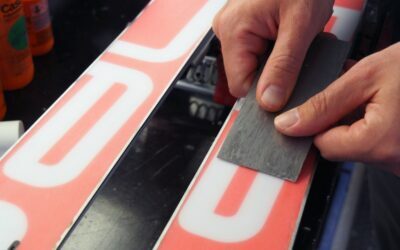
Storing skis until next season
Putting your skis to bed for the summer, clean and protected, is a chore, but it’s got to be done. It’s more than worth it. Here we break down the basics. Your skis will thank you. Actually, you’ll thank yourself come the first snow – for all sorts of reasons…

Care for the outdoors dog
All good research on dog training agrees: planning is key for keeping a dog happy and thriving. This applies when adapting to new environments and weather conditions. Ideally, your dog would probably be inside the cabin or at home in front of the fireplace as much as possible when it’s cold outside. But if we make the decision to take the dog out into the cold, it’s our responsibility to make certain that the animal’s well protected.
Using nature in Norway – like a Norwegian
Norway’s guarantee of the right to roam is a cherished part of our national identity.
But even though you’re free to move about throughout the country, there are still laws and regulations that must be respected.

Field repair kit
Bringing a repair kit can be very useful, even if you’re not going on a long expedition. Preparation, as always, is never a bad thing.

Dressing for adventure: what to wear in the wild
Norwegian grandmothers have it right: always wear wool against the skin. Beginning with wool as the first layer, the three-layer principle applies. Step this way for a guide to wrapping up warm in the wild.